The Black Box of Social Media
INTRODUCTION
Throughout my work, The Black Box of Social Media, I attempted to bring the meaning behind the “black box” alive. The concept explains how large tech companies often present their products as black boxes, encouraging users to purchase a new device when something goes wrong rather than trying to fix the device. As a result, many customers believe the devices are too hard to understand for themselves and resort to purchasing a new product.
In a similar way, social media companies are very protective of their algorithms, the instructive lines of code behind a social media platform. Like the black box concept, large social media companies, such as Meta and ByteDance, are not enthusiastic about sharing algorithmic information with the public. The algorithms of TikTok and Instagram are extremely powerful and designed to be addictive to users. In the same way, casinos lure customers in, and social media algorithms pinpoint users’ specific interests and feed them targeted content to keep them on the app. Throughout this project, I strove to communicate to my audience the addictive nature behind their favorite social media platforms and open viewers’ eyes to the addictive nature of algorithms.
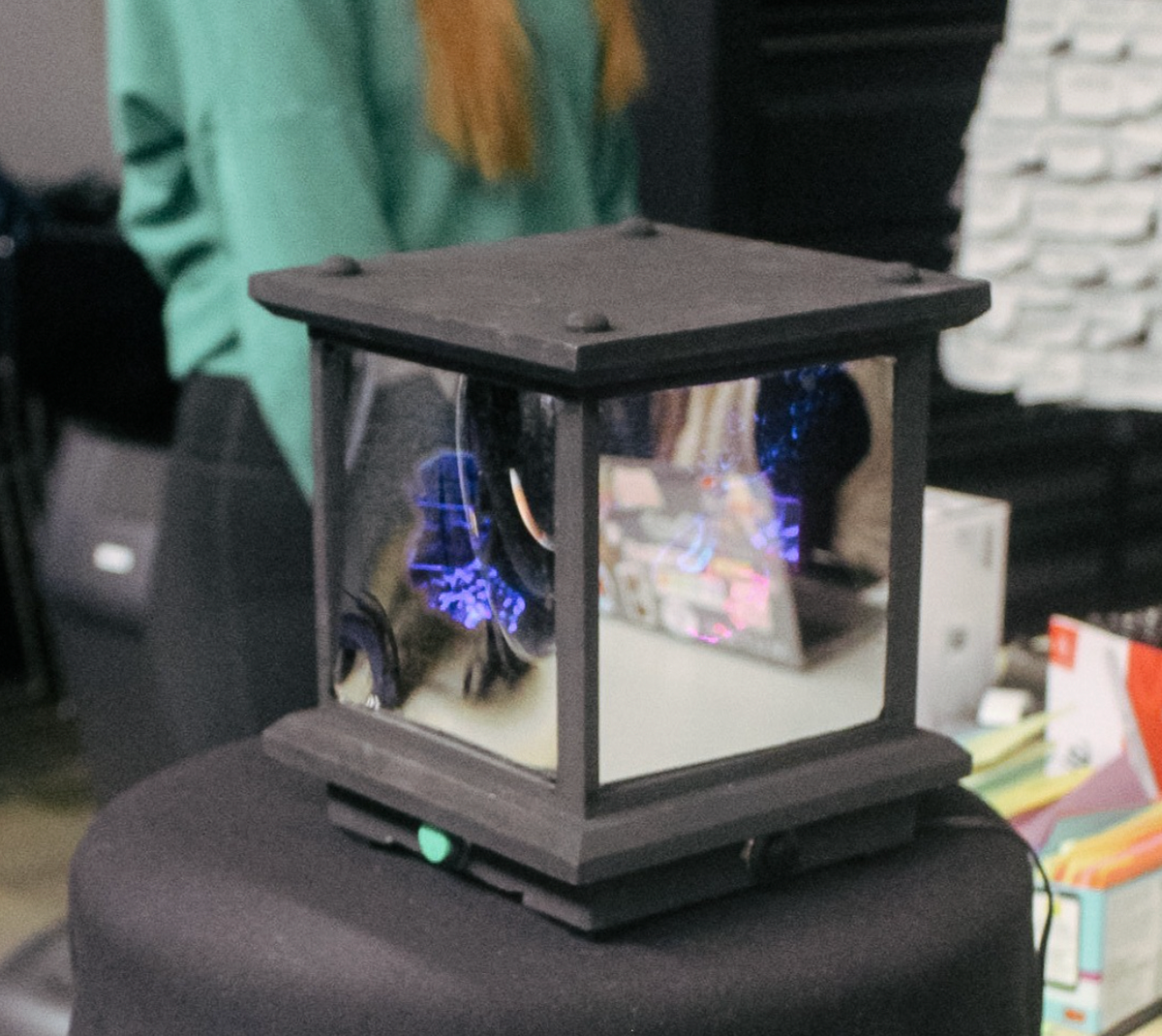
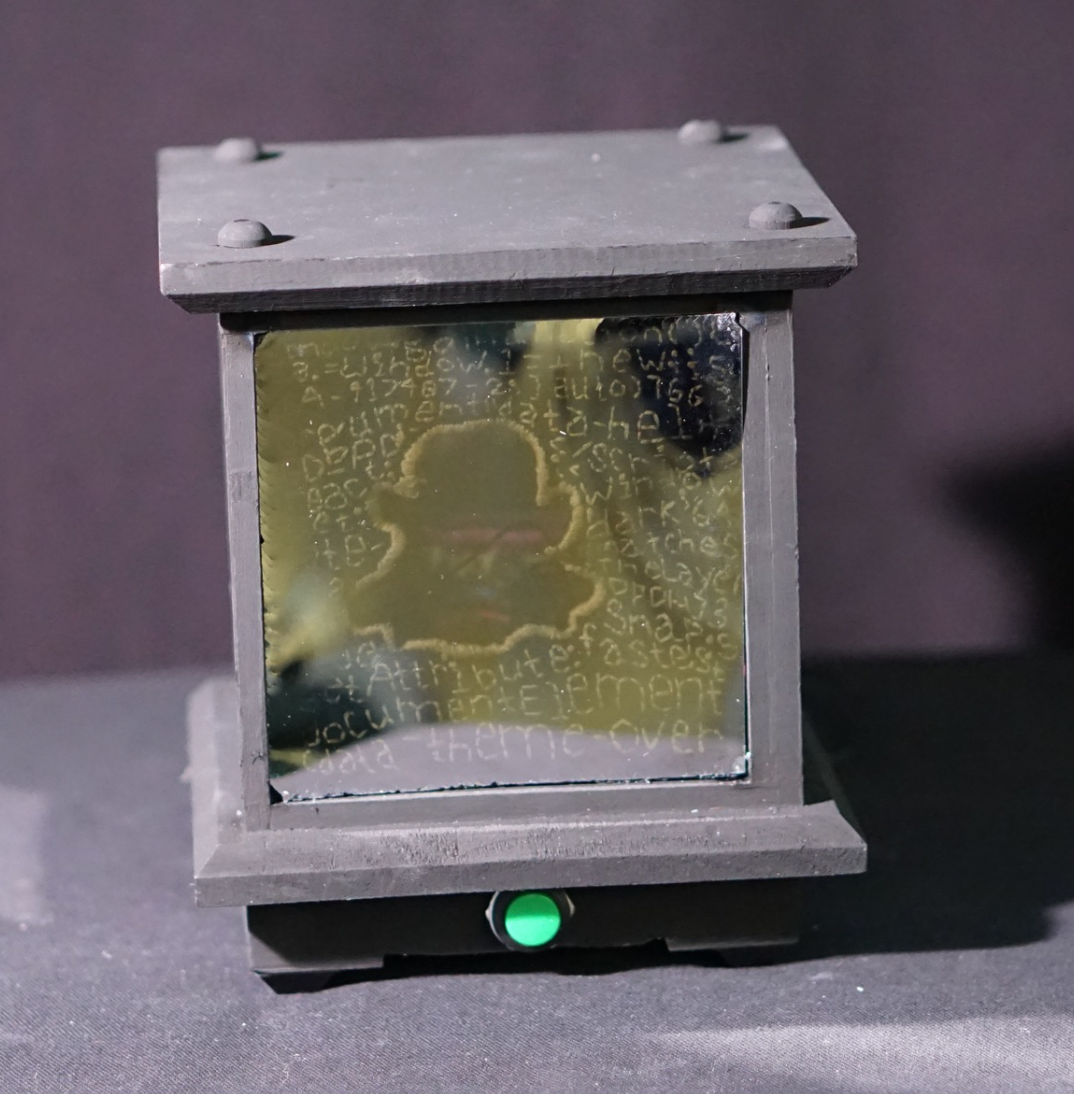
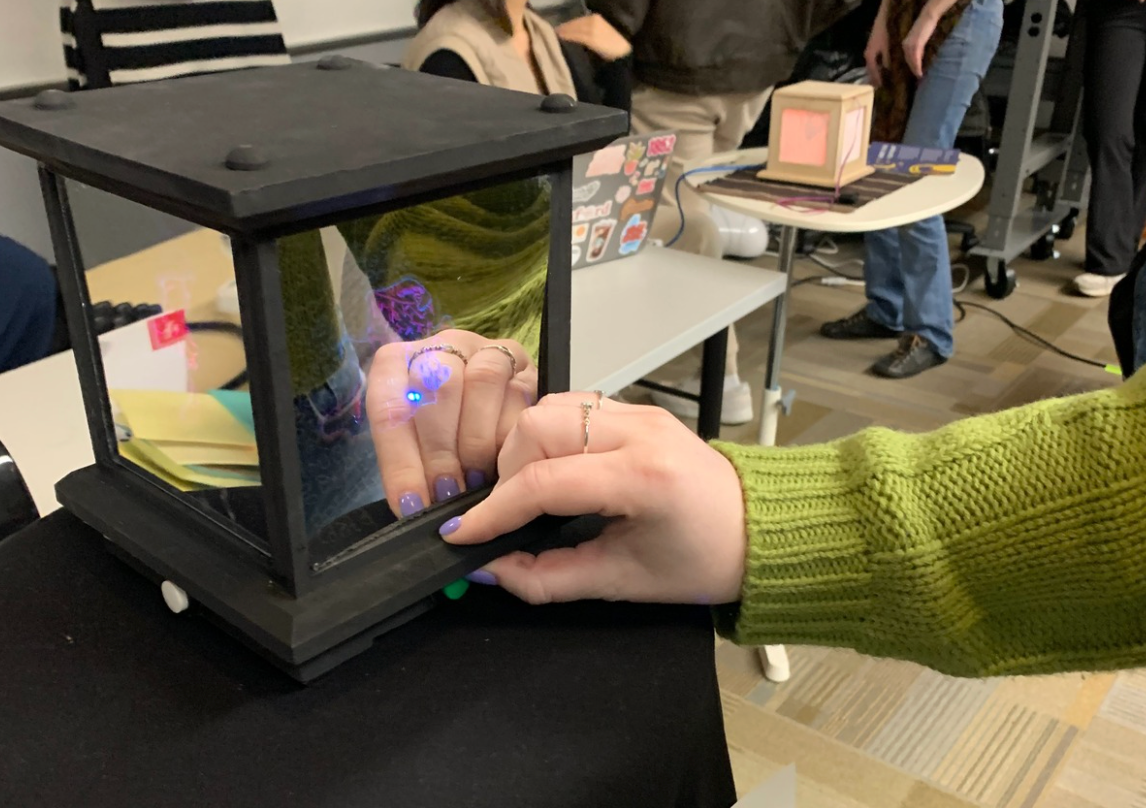
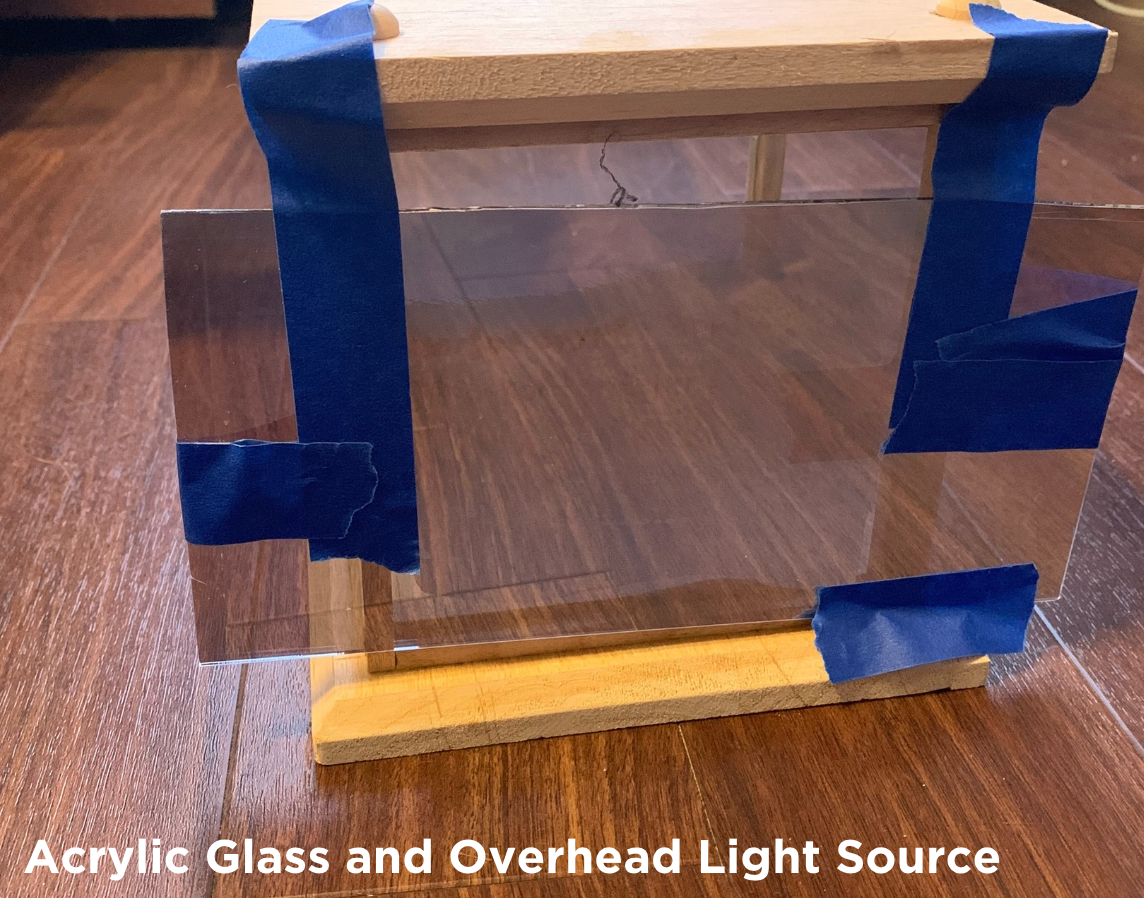
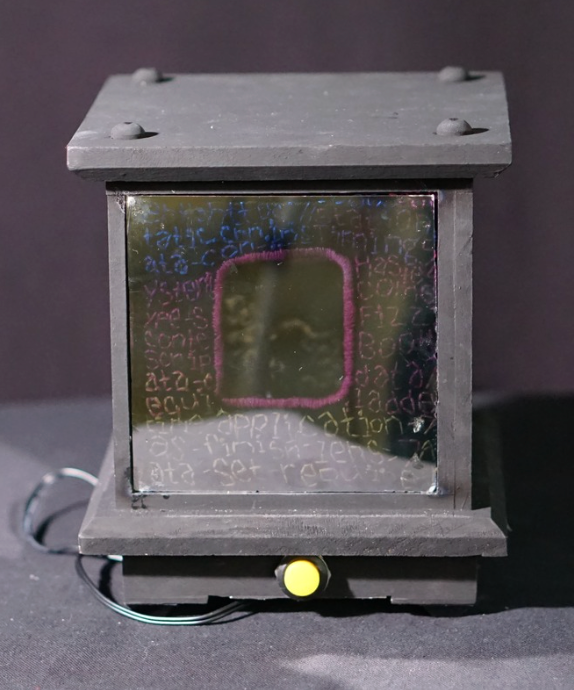
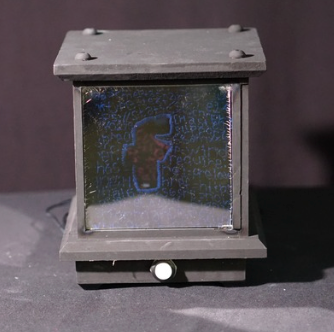
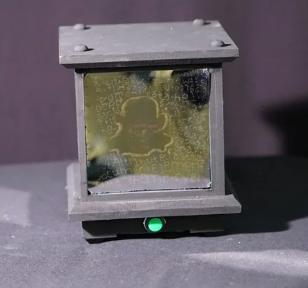
To create The Black Box of Social Media, I utilized the technique of embroidery. Before completing the project, I enjoyed embroidering, so I knew I could embroider the many letters and numbers that composed the algorithms. Additionally, I employed a microprocessor and LED lights to illuminate the inside of the box at the press of a button. Each light shines a different color to represent Instagram, Snapchat, Facebook, and TikTok. The glass panels are made of acrylic glass, which is reflective at first, but when light is placed behind the panel, the glass becomes translucent.
BRAINSTORMING
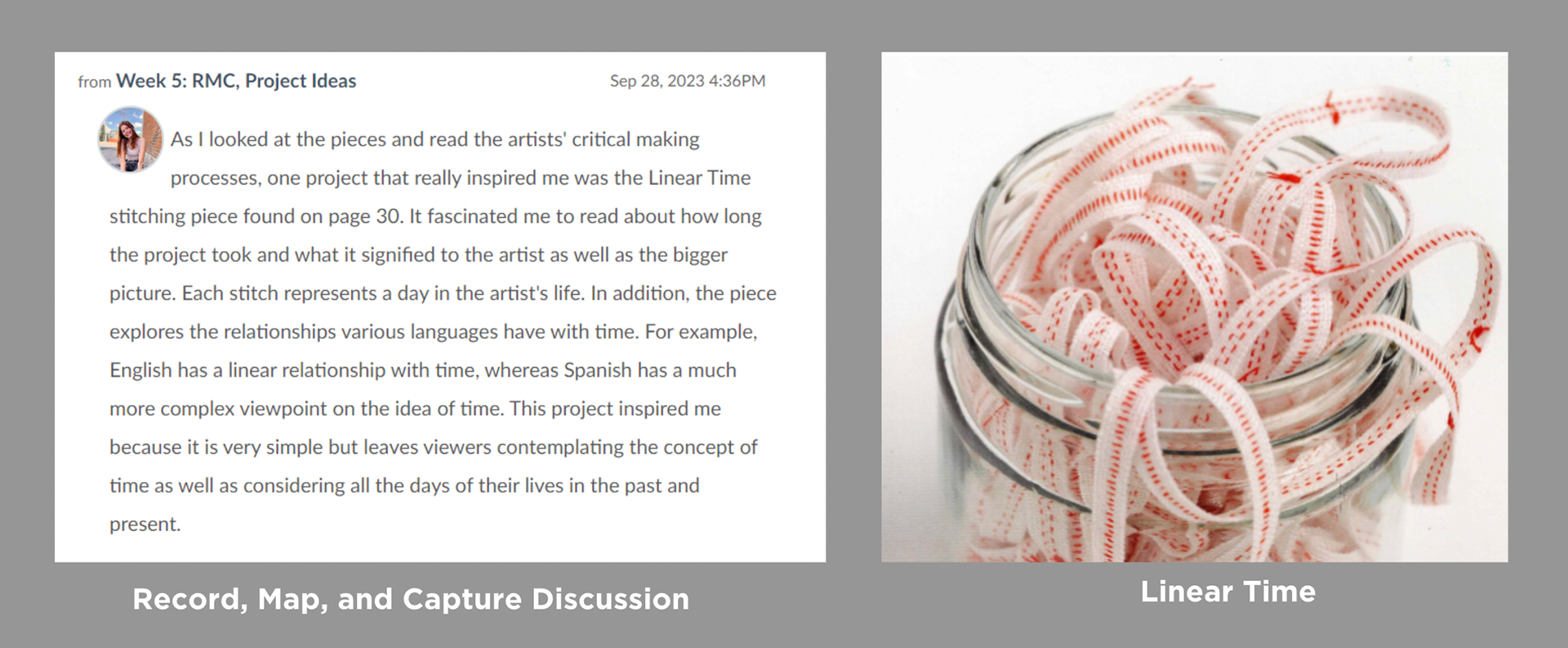
As I began the brainstorming process for my project, I was originally inspired by my second project, and I knew that I wanted to include the technique of embroidery in my work. In addition, the book Record, Map, and Capture provided me with a launching point during the brainstorming process. I especially enjoyed the piece titled Linear Time because it demonstrated the power of a data representation and also used the technique of embroidery to create an effective work of art.
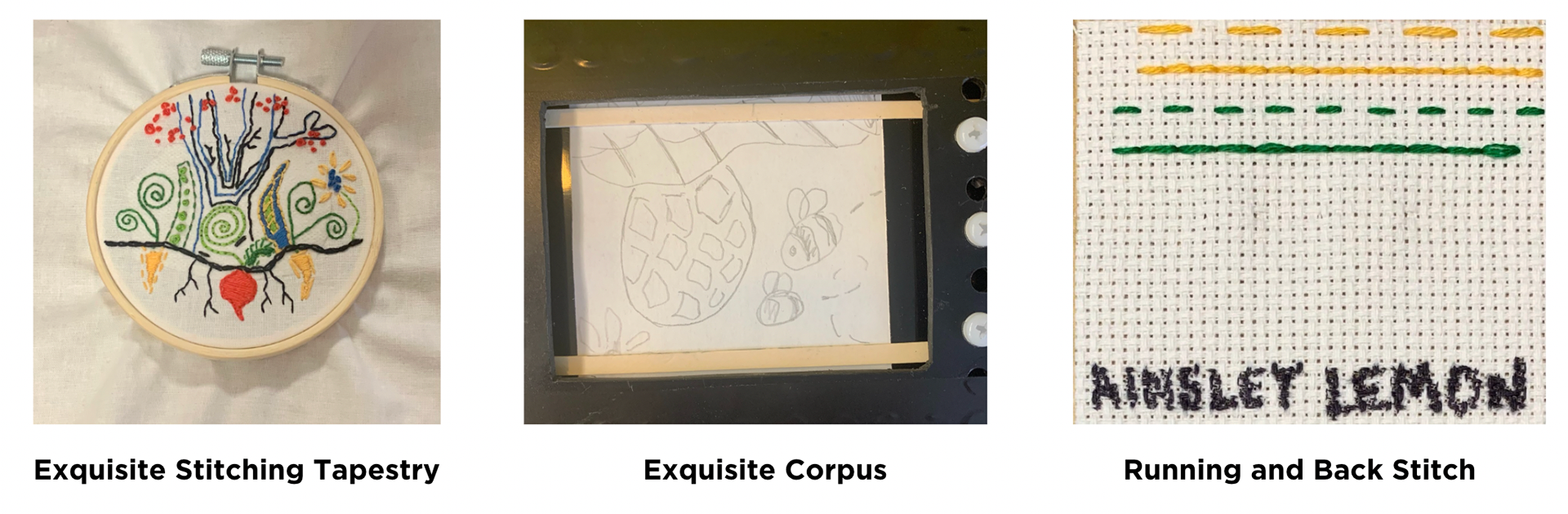
By completing project two, Exquisite Stitching Tapestry, I learned how to embroider shapes as well as a variety of stitches, such as the running stitch, back stitch, and French knot. Additionally, the Exquisite Corpus exercise prompted my creativity and made me think quickly on my feet. This skill helped me throughout my final project when elements went wrong or required reworking. During the brainstorming process, I was also inspired by both Matt Ratto’s and Zazai’s writings. Their works taught me that critical making combines multiple fields of art, both traditional forms and nontraditional, which was something I strove to portray in my final piece.
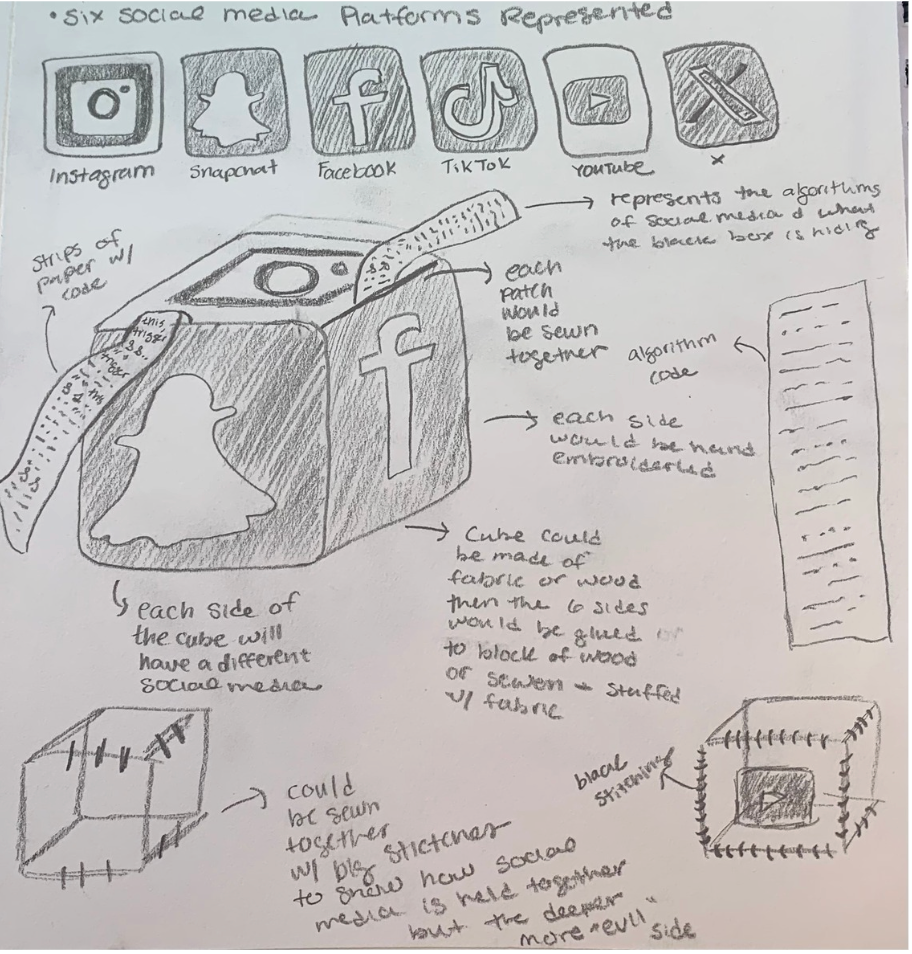
My idea first began with creating a six-sided cube out of cloth and embroidering a social media logo on each side. The cube was going to be soft and stuffed with paper that held the algorithmic code of various social media platforms. Additionally, the code-filled pieces of paper would leak out the top, bottom, and sides of the “black box” to represent the truth behind social media. Each logo was going to be elaborately embroidered, displaying the aesthetically pleasing distraction of social media platforms, but the code leaking out would show viewers what social media is hiding and the addictive nature of the algorithms. The speculative design activity opened my mind in new ways and has helped me see my art in a new light going forward. I found the exercise refreshing as I was able to put all limitations aside and simply brainstorm.
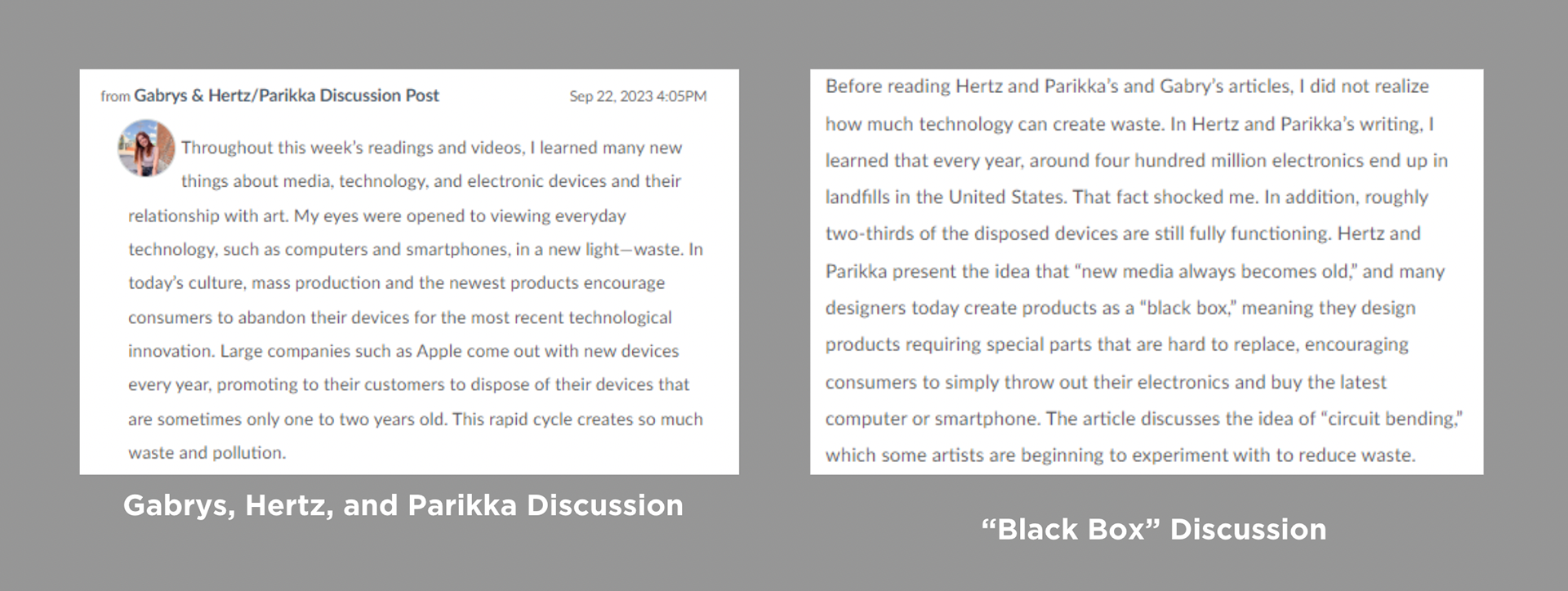
I was inspired by Hertz and Parikka’s article and the concept behind the “black box.” I learned through the articles that many designers are trained to create technological devices that require special parts or are hard to understand for the average person, so individuals are encouraged to buy new products instead of fixing their old computers and phones. Similarly, social media hides its addictive nature behind a nicely tied bow of a clean, simplistic interface. As I began experimenting with various social media platforms, I found it extremely difficult to navigate to the settings of Instagram and Facebook. Meta purposefully hides away the settings so users do not realize the personal information social media accounts consume.
At this point, I decided to focus on the critical making category of addressing a specific pattern of technological development across time. I thought my piece would showcase the technological concept of the “black box” while simultaneously communicating how, throughout the years, social media algorithms have become extremely personalized and targeted, adding to their addictive nature.
SKETCHING & ITERATION PROCESS
The sketching process helped me generate ideas while also assisting me in deciding which social media icons to utilize in this project. At first, my vision was to create a cloth-embroidered cube. After discussing the idea with Dr. Weisling, I decided to shift my vision to include a light source and utilize a new material, acrylic glass, which would provide the “hidden” and “revealed” effect I hoped to achieve. Going forward, I would still utilize the technique of embroidery, but I added LED lights and acrylic glass to the design.
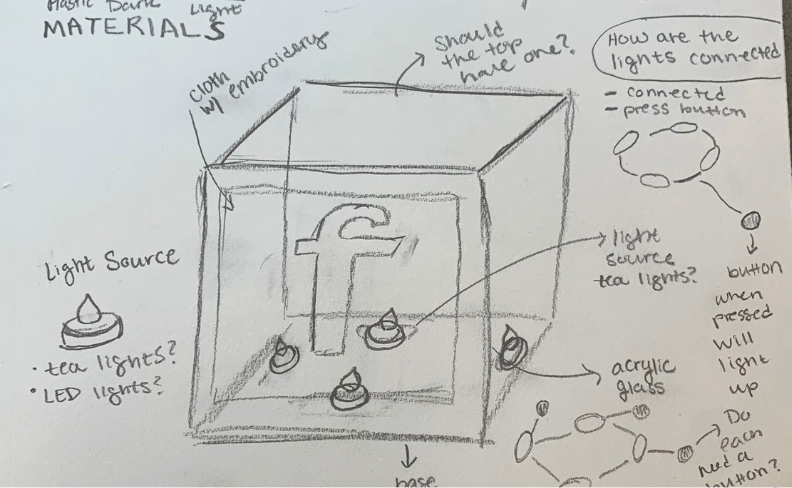
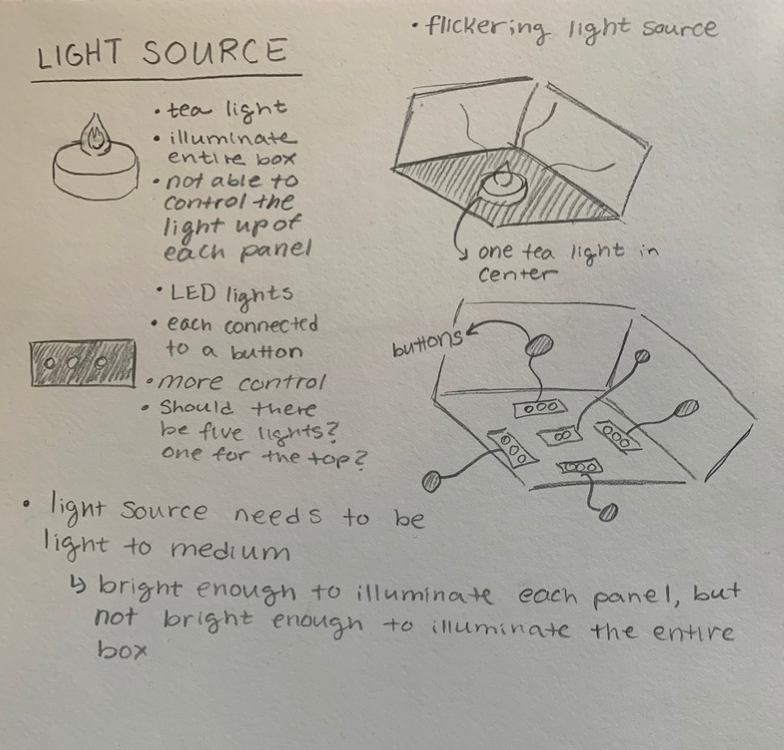
The images below are sketches of my original idea, with cloth as the primary material. I debated using tea lights, but ended up with LED lights for the neon effect and the ability to control the changing colors at the click of a button. I experimented with multiple tea lights as well as a singular light source in the middle. In the end, I decided to go with four LED lights that were attached to buttons so viewers could press a button, and a different colored light would illuminate a panel of the box. I wanted the lights to reveal the inner workings of the social platforms’ algorithms, addressing my chosen critical making category, which explored the pattern of addictive social media algorithms across time.
IMAGES & INSPIRATION
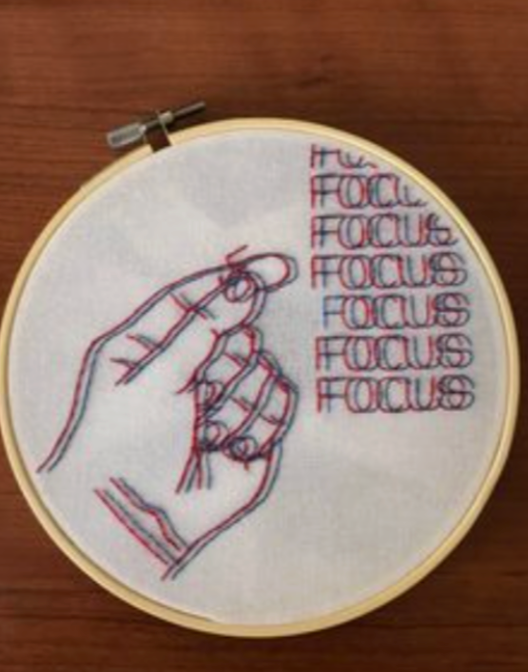
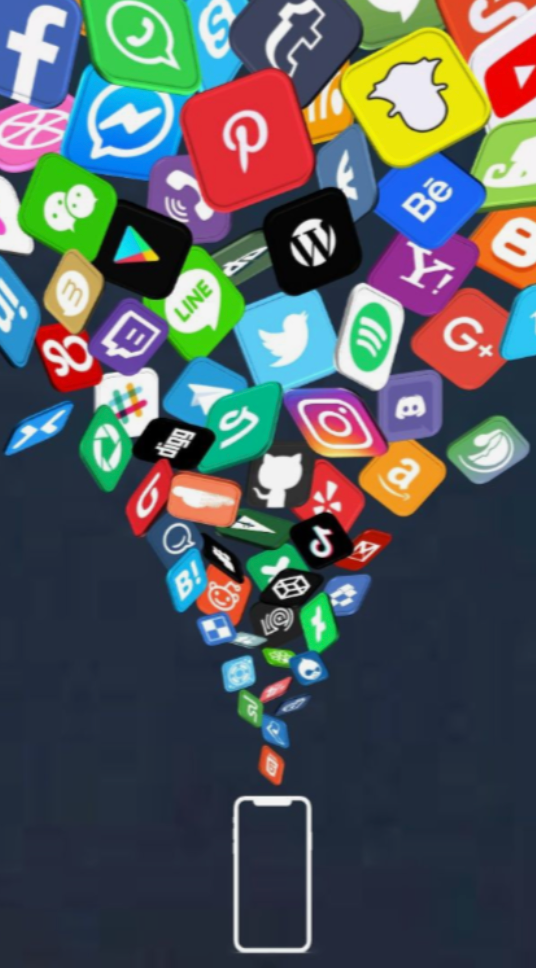
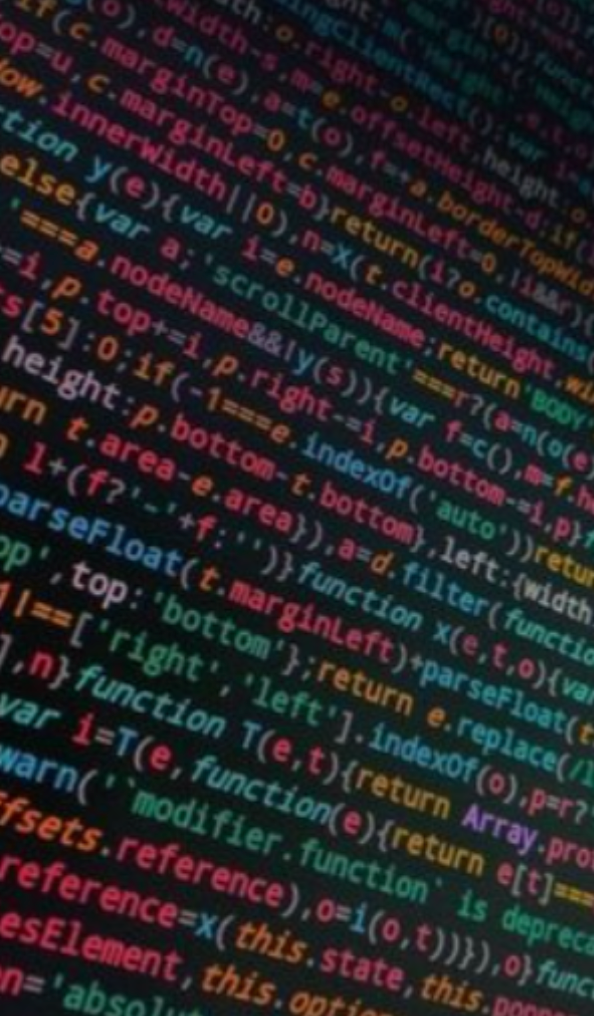
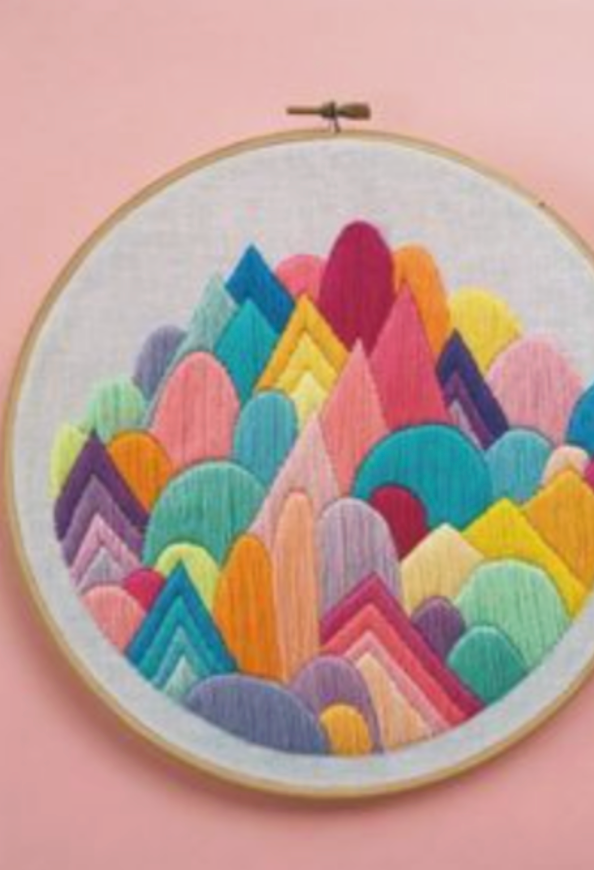
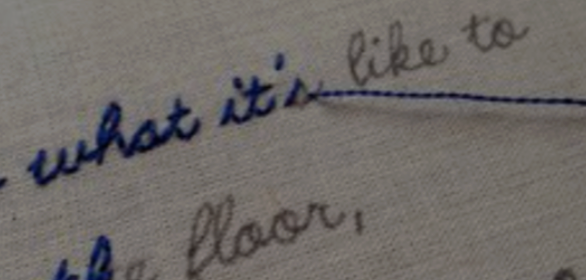
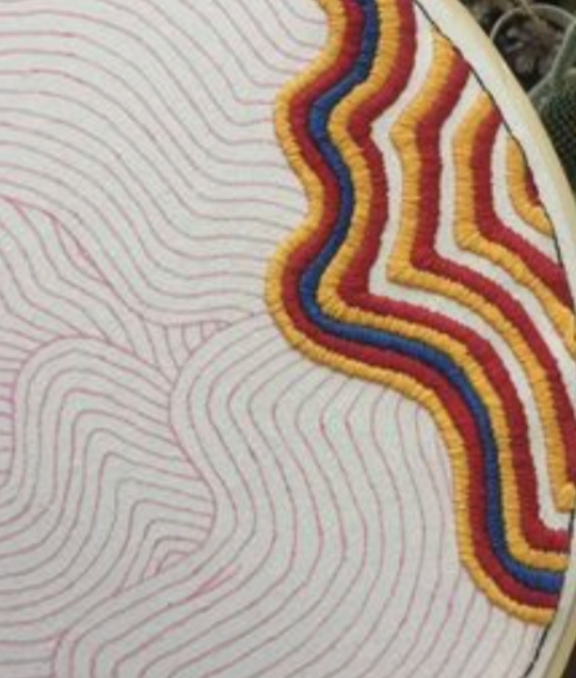
After the sketching process, I compiled some photos for inspiration from Pinterest as I began the design and prototype process. Each image is a representation of an element incorporated into my finished product. I wanted a neon glow to my design, which is why I decided to utilize LEDs as the light source. Additionally, the various lines of code and embroidery pieces demonstrate the vision for the embroidered algorithms on each panel of the glass cube. Overall, I wanted my piece to exhibit a neon glow illuminating the hand-stitched code and social media icons.


PROTOTYPING & TESTING
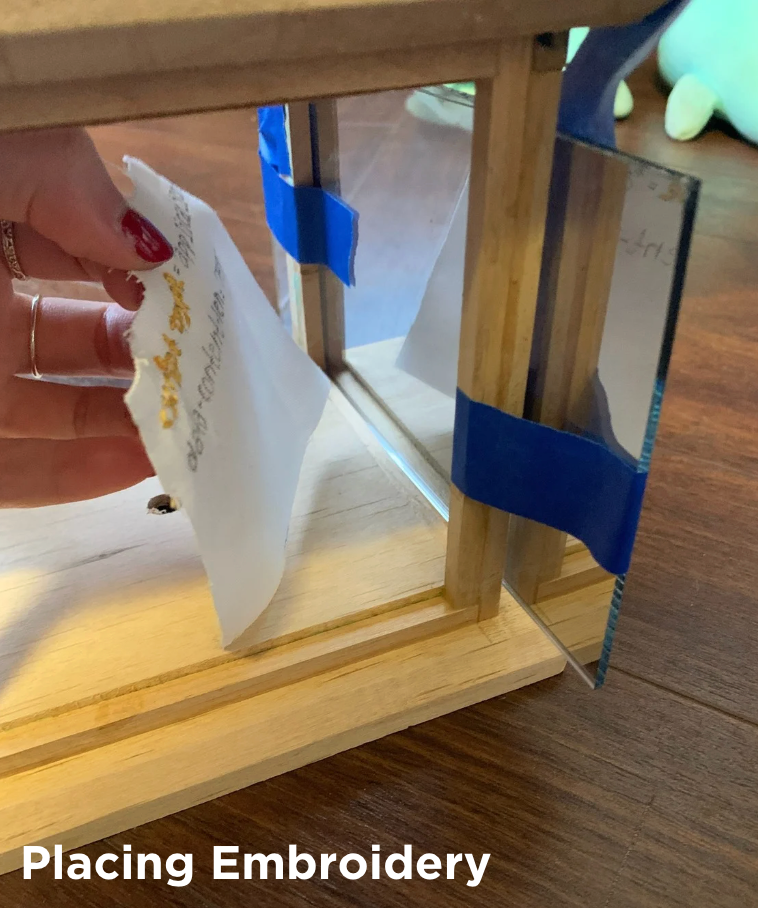
As I began the prototyping process, I began experimenting with various light sources. I used a flashlight with different light levels to determine which level works best for revealing the embroidery behind the acrylic glass. Additionally, I experimented with multiple materials for the embroidery base, including white and black canvas and clear plastic.
After brainstorming, sketching, and beginning to prototype, I discovered that the black canvas works best for clearly showcasing the embroidery. Also, I learned that a medium to large amount of light is required to illuminate the acrylic glass.
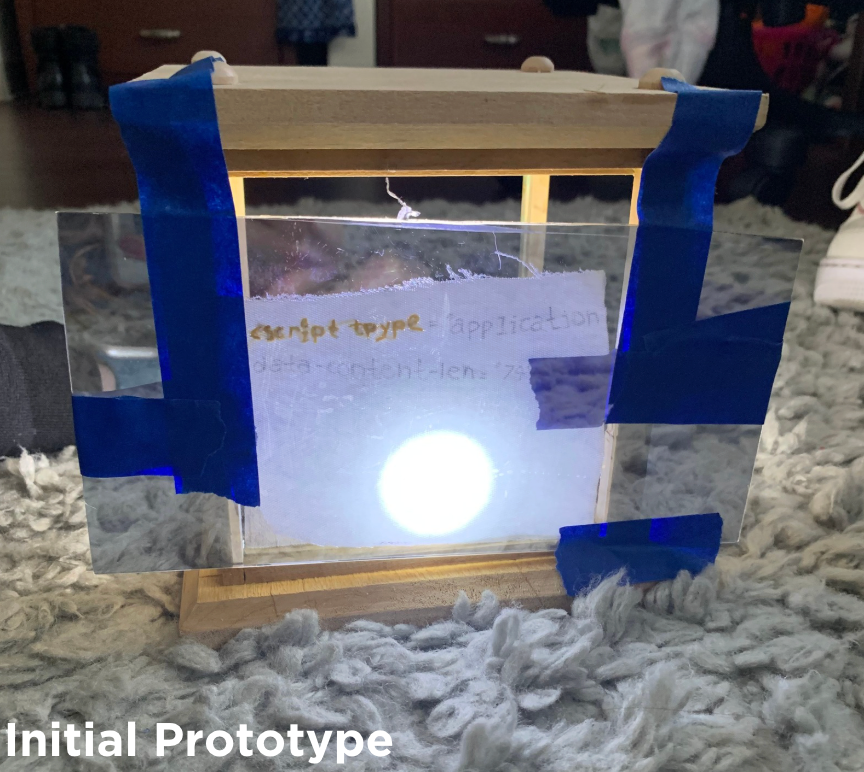
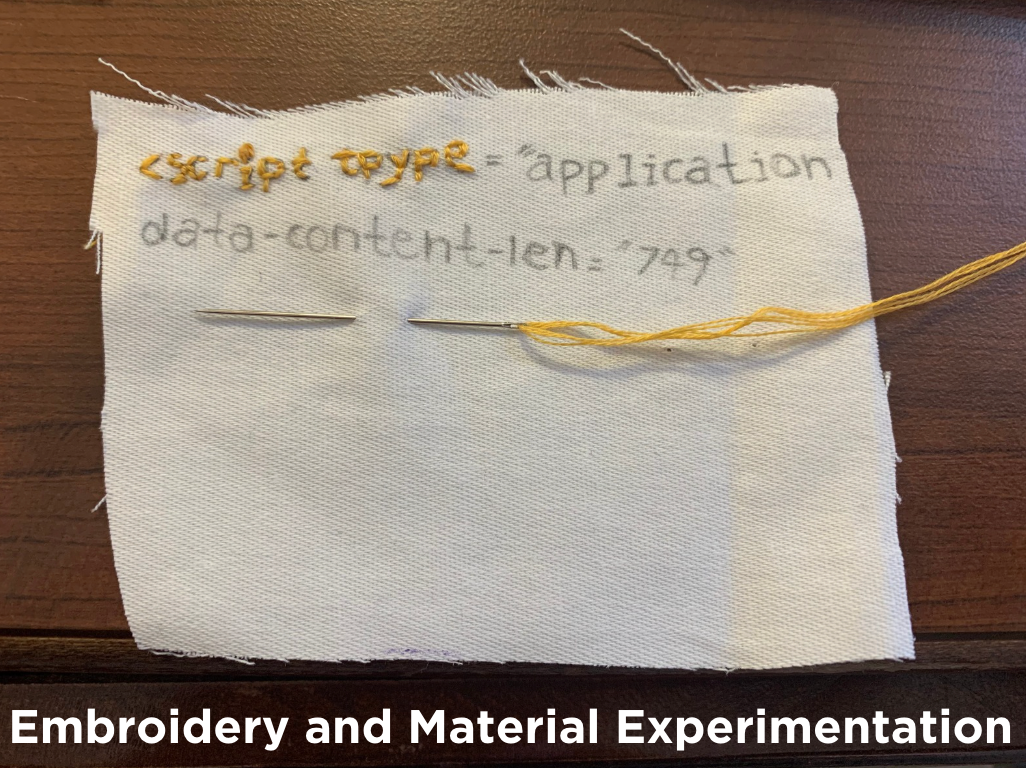
One challenge I began to face during the prototype phase was the appropriate amount of light. I wanted enough light to shine through the glass but not so much that the entire box would be illuminated with one LED. At this point, I also realized that the LED lights had to be extremely small due to the limited space inside the box.
After sharing my prototype with my classmates, they understood the concept and provided some suggestions, such as cutting the social media logo out of the cloth and embroidering code in the background to allow a hole for the light to shine through.
FABRICATION & REFINEMENT
After figuring out the general design and becoming comfortable with my materials in the prototype process, I spent many hours in the lab with Dr. Weisling, working to make the LEDs, buttons, and microprocessor all work together to enable viewers to engage in an immersive experience. In addition, I began embroidering the four final cloth squares. I chose Instagram, Snapchat, Facebook, and TikTok as the social media platforms featured in my project. Once the LED lights and buttons were fully functioning, I added a small box under the larger cube to hold excess wires, as well as a place to mount the four buttons. In the end, I decided to keep the microprocessor inside the main cube to add to the design effect of turning on the lights and seeing the inner workings of the “black box.”
One of the last steps was painting the box and assembling the final cube. I wanted the box to be fully black to add a physical effect to the mental concept of the “black box.” Additionally, cutting the acrylic glass presented many challenges as each side of the box was a slightly different size, so each panel had to be measured and cut individually. During the cutting process, the glass started cracking along the edges, but this effect added to the final overall look of the piece, demonstrating the shattering reality of the addictive nature behind social media platforms.
LITERATURE REVIEW
Introduction
I conducted multiple sources during the research, each surrounding social media, which helped me view social media platforms in a new light and greatly assisted me while creating my final project. I found it helpful to hear multiple perspectives regarding the controversy surrounding social media, its addictive nature, and its influence on users.
It's Complicated
Throughout Danah Boyd's “It’s Complicated,” my eyes were opened to an entire world of social media I had not previously considered: the context. In today’s culture, adolescents are expected to conform to the various contexts and social norms of each social media platform, which sometimes involves going against their values by portraying themselves behind false personalities. Boyd writes, “Teens are struggling to make sense of who they are and how they fit into society in an environment in which contexts are networked and collapsed, audiences are invisible, and anything they say or do can easily be taken out of context.” Teens see their social media followers as a completely different audience from their school teachers and admission counselors. The adolescents’ actions and posts on Instagram and TikTok are not necessarily their true personalities or opinions. They are simply trying to fit in for survival and social acceptance. In addition, many young adults do not realize who can see what they post on social media. Boyd states, “Teens often imagine their audience to be those that they’ve chosen to ‘friend’ or ‘follow,’ regardless of who might actually see their profile.” Overall, Boyd’s article was extremely informative and helped me understand another aspect of social media, which helped me throughout my project.
Networked Anxieties
In James Pierce and Carl DiSalvo’s “Projecting Network Anxieties with Alternative Design Metaphors,” they begin by describing key components of the internet. The internet is hard to describe concretely; Pierce and DiSalvo state, “Shapeless and faceless, everywhere and nowhere at once, the Internet must be grasped in metaphorical terms.” Internet metaphors help us better grasp the historical context and future hopes and dreams surrounding the internet. Moving from defining the internet, Pierce and DiSalvo turn to explaining “networked anxieties” and describing the dark side of the internet. They write, “Our work projects and engages negative affective dimensions of digital networks, including anxiety, exhaustion, overstimulation, overload, paranoia, unease, distrust, fear, and creepiness.” Although there are many different languages online, the universal language of the internet is spoken in emojis, where people are free to express themselves through graphics. I believe this to be true in social media as well. Social media users can include emojis in their posts and utilize the icons to convey a certain tone.
The Dangers of the Rabbit Hole
Throughout the article, “The Dangers of the Rabbit Hole: Reflections on Social Media as a Portal Into a Distorted World of Edited Bodies and Eating Disorder Risk and the Role of Algorithms,” Jennifer Harriger, Joshua Evans, J. Kevin Thompson, and Tracy Tylka examine social media’s affect on body image and how the algorithms behind these platforms may increase body negativity, especially for younger users. The authors write, “Social media companies’ use of algorithms may intensify this association, as algorithms provide viewers with personalized content that is often more extreme, less monitored, and designed to keep users engaged for longer periods of time.” Social media places unrealistic beauty expectations on young users, and features, such as filters, teach teens that to be considered “beautiful” their bodies should look like the edited versions in real life. Not only are these edits unrealistic standards of beauty, but they are also unhealthy and can lead young teens to eating disorders and mental struggles. The article states, “Many social media influencers (i.e., a user high in social standing who has the power to affect their followers’ beliefs and purchasing decisions) showcase highly edited bodies they claim they achieved through diet, exercise, or products they are paid to promote and exposure to unrealistic, idealized images is linked to increased risk for disordered eating and body dissatisfaction through mechanisms such as self-objectification and appearance comparisons.” Even though users have the freedom to decide who they follow, the algorithms of social media target users so they are not protected from certain content they may be trying to avoid. Many social media platforms use highly targeted advertising to learn what users enjoy and feed them content that will absorb their attention span, leading to hours spent on social media.
A social media platform that is highly guilty of targeting users is TikTok. What is even more interesting is that the company knows the addictive effect its algorithm is having on young users and continues to develop even more targeting techniques. The authors write, “Additionally, some social media platforms, such as TikTok, tend to rabbit hole users into less monitored and more extreme content quickly, as the algorithm learns what users are willing to view for longer, in an attempt to increase the time they spend on the platform.”
Going forward in my research and final project, I hope to communicate the hidden motives behind social media’s highly technical algorithms. It is amazing how powerful social media platforms, such as TikTok, algorithms are. In my project, I want to reveal the addictive nature of social media, feeding its users targeted content, and make my audience realize the much larger rabbit hole they find themselves in when a five-minute Instagram scroll turns into hours.
ETBD EXPO EXPERIENCE
I greatly enjoyed presenting my finished work at the ETBD Expo. Sharing my project with others was encouraging as I could see people directly interacting with my art and realizing the purpose behind the piece. Additionally, I appreciated getting the opportunity to talk to so many individuals about my design process and the reasoning behind making The Black Box of Social Media. It surprised me how many people were interested in my work and enjoyed pressing the buttons and looking inside. Individuals old and young alike found pleasure in making the LED lights shine in various colors throughout the box. I also appreciated people’s comments about my embroidery work and the time spent meticulously transferring code from a computer into a work of art. Overall, it was extremely rewarding seeing my piece displayed “in the real world,” and I was satisfied with the final result.
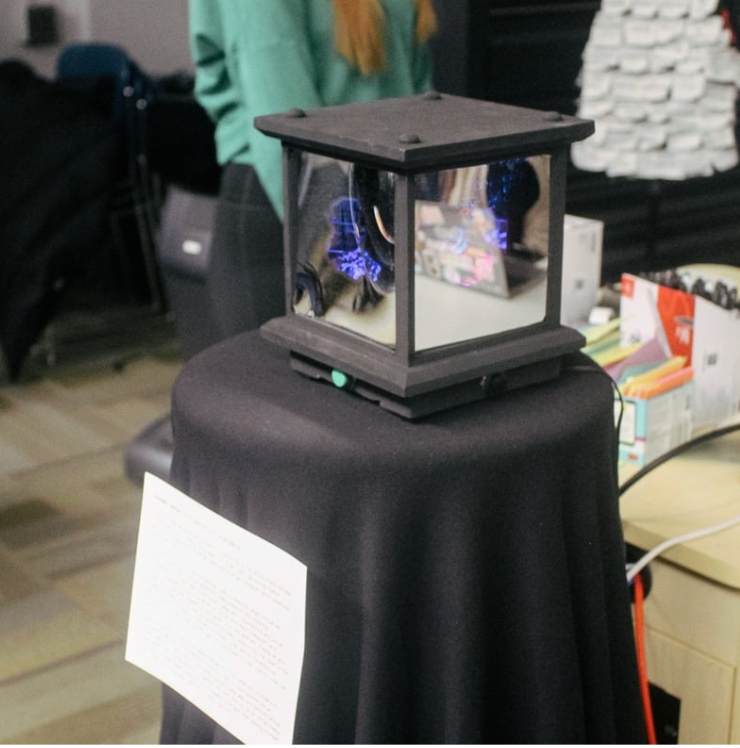
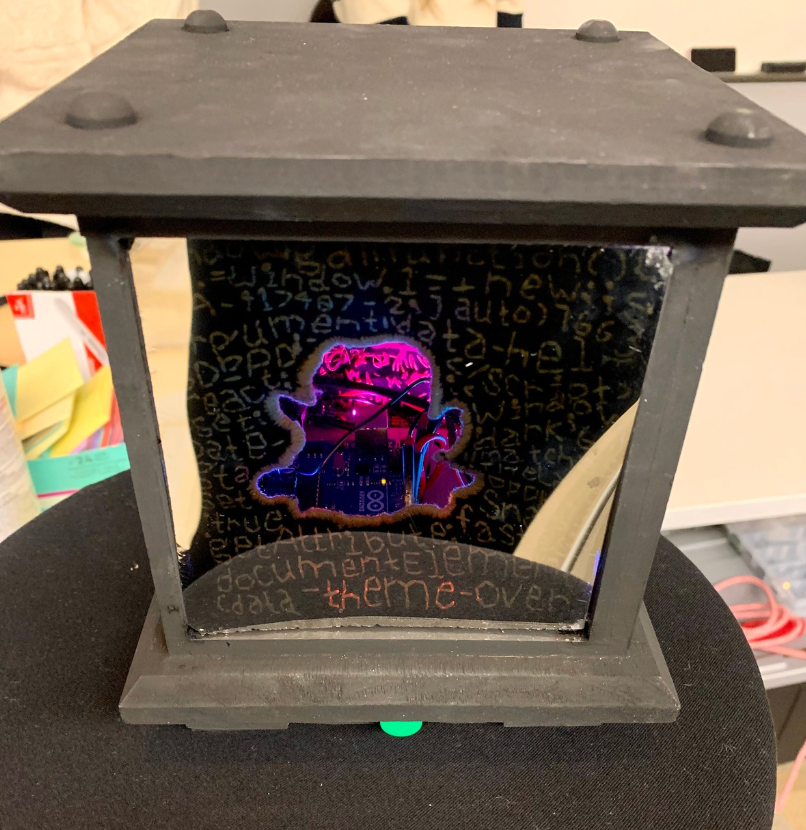
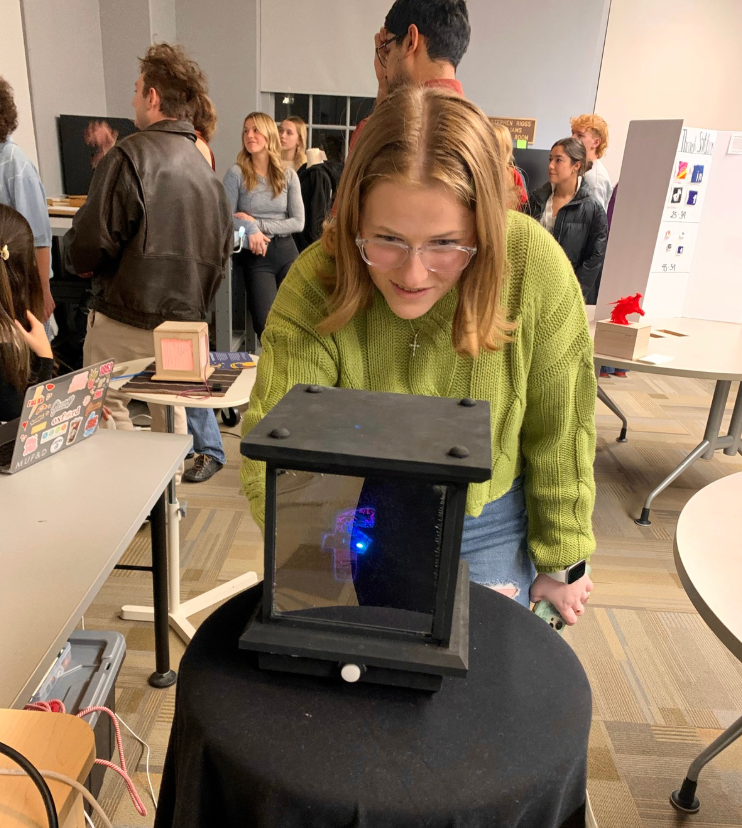
Something that was slightly disappointing was that the lights were not quite as bright as I would have liked them. In the future, I hope to update the code to alter the brightness of the LEDs. If all the lights were turned on, the code shone through the acrylic glass, but one singular LED did not have the power to illuminate a panel of embroidery. Another thing I wished turned out more polished was the glass. I do not think I cut the panels in the most efficient way, but now, I have embraced the cracking along the edges and see it as a design choice.
CRITICAL REFLECTION
Over the last fourteen weeks, I can say that critical making has transformed the way I think and view art. No longer do I see art simply as a pretty painting or intricately designed quilt; critical making has taught me that art has a purpose and the power to communicate important topics. Through data representations, displays, and many other forms, artists have the opportunity to share a much larger message with their audience. After taking critical making, I have grown in my ability not only to create with new materials but to make my art mean something more than a “pretty picture.”
In addition, this semester, I was able to experiment with many new materials, such as silicon molding, embroidery, and weaving. Each of the projects taught me something new and showed me that I am able to create polished final projects even if I am not an expert in the material. Going forward, I will no longer be afraid to take risks and experiment with art. Playing it safe does not produce growth or present challenges to overcome.
Through the readings, discussions, and in-class activities, I was able to learn more about individuals who have dedicated their professional lives to critical making, hear the opinions of classmates, and learn to work in a group to solve a problem. My favorite exercise was learning about and applying the concept of speculative design. I greatly enjoyed working with a team to come up with a solution to a problem that could benefit all of humanity.
Finally, designing, prototyping, and finishing a project of my own developed my personal character and helped me grow as a designer. After all my hard work this semester, I was honored to be able to present my piece to others, and it made me overjoyed when people took an interest in my art. I learned how to transform an idea from paper to a physical object as well as overcome setbacks. The process presented many challenges and new opportunities. Before this project, I had never embroidered on such a large scale or worked with microprocessors.
In conclusion, I can say that critical making has shown me what I am capable of creating and the power art has to highlight important messages. I will take what I have learned in this course with me throughout the rest of my design career, both in school and in my professional life.